Slime State of Mind
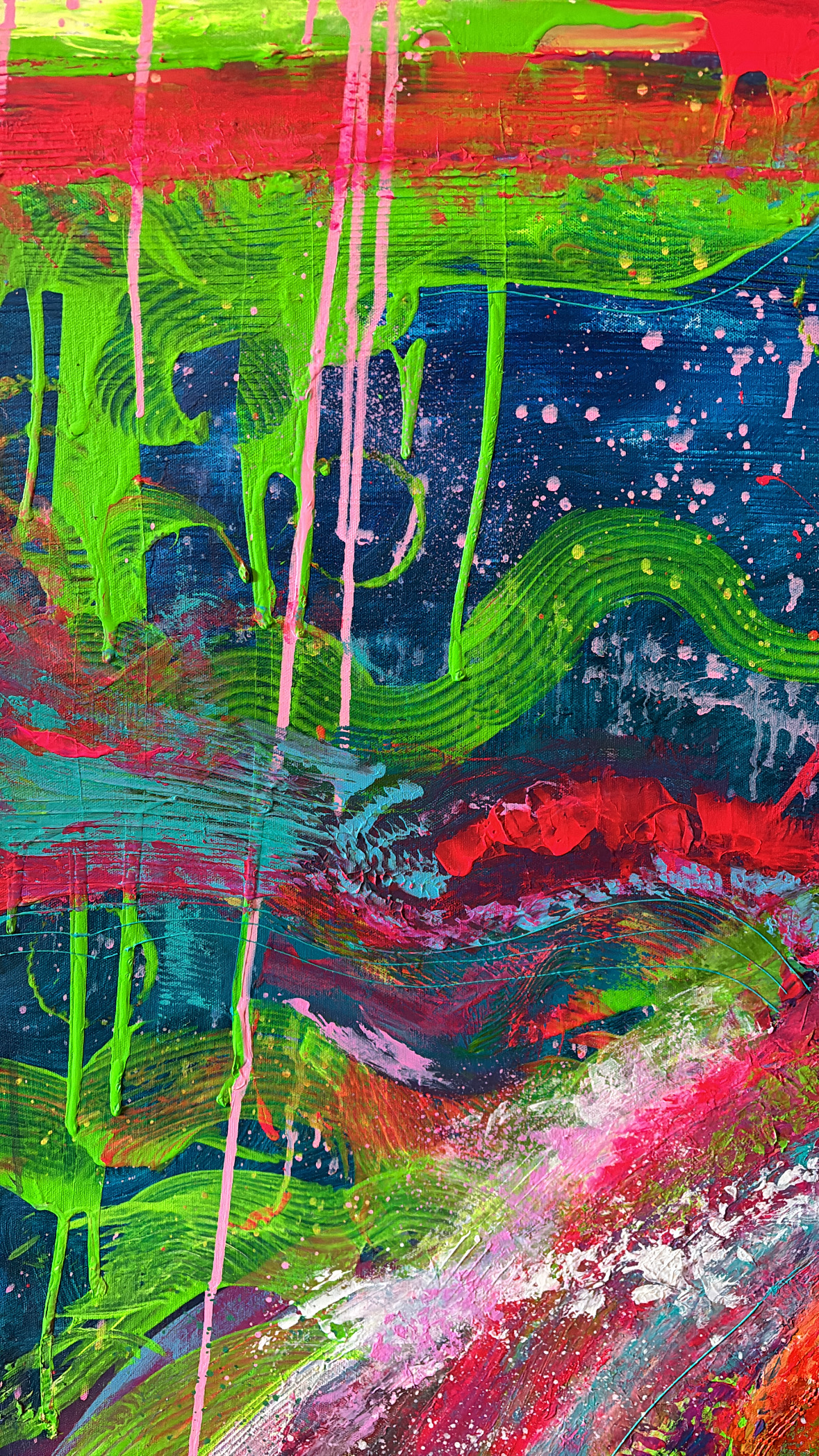
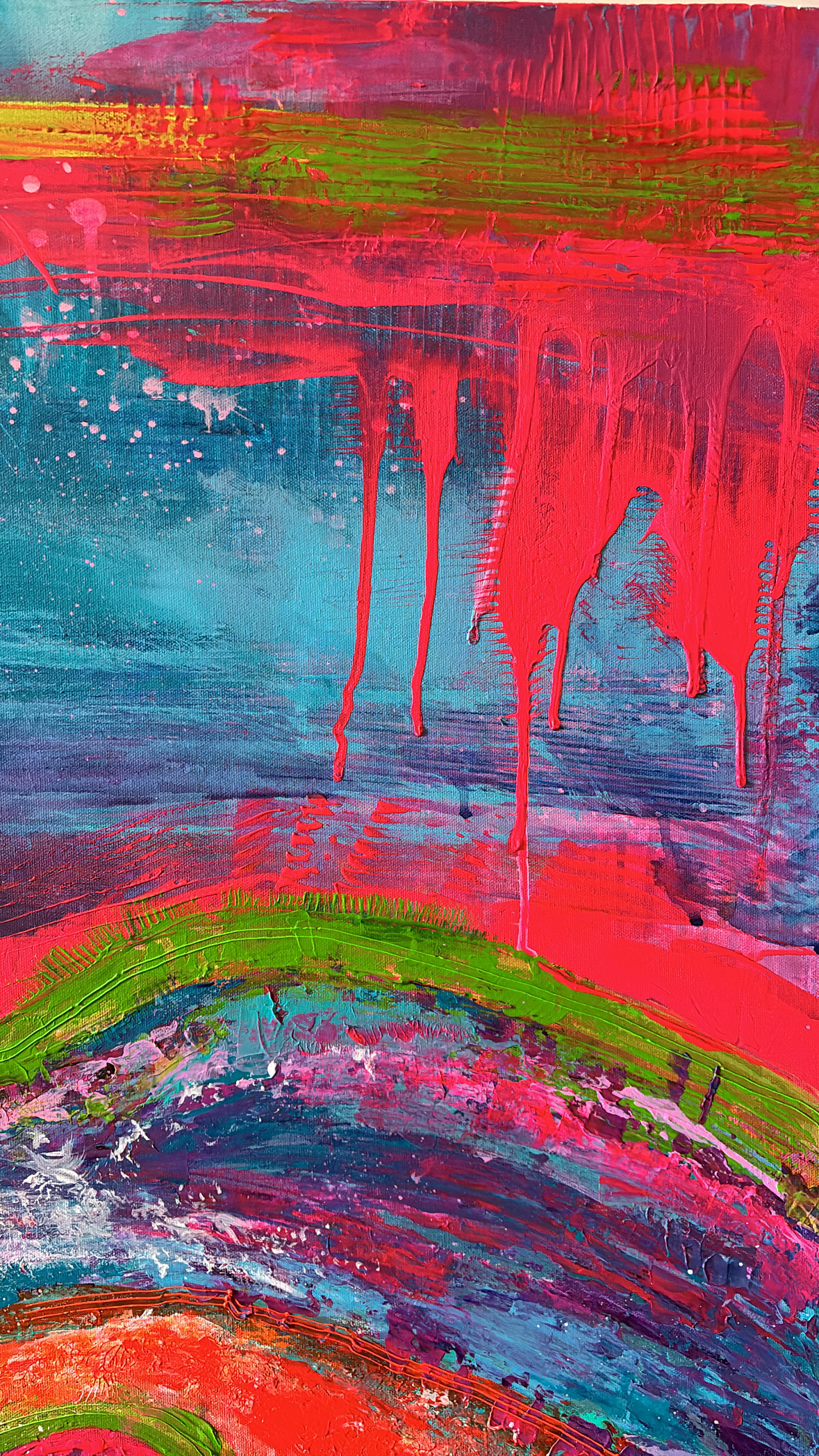
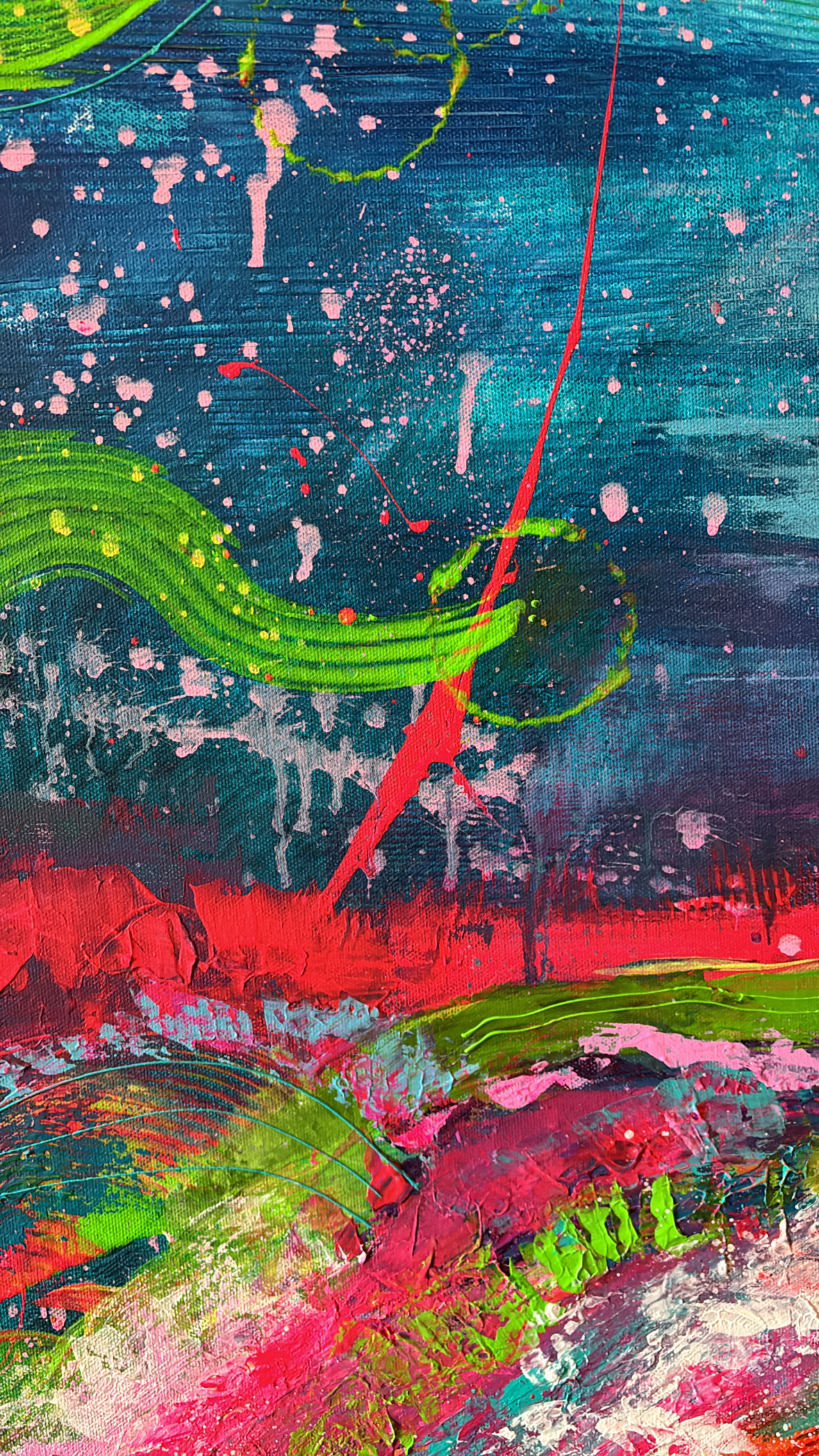
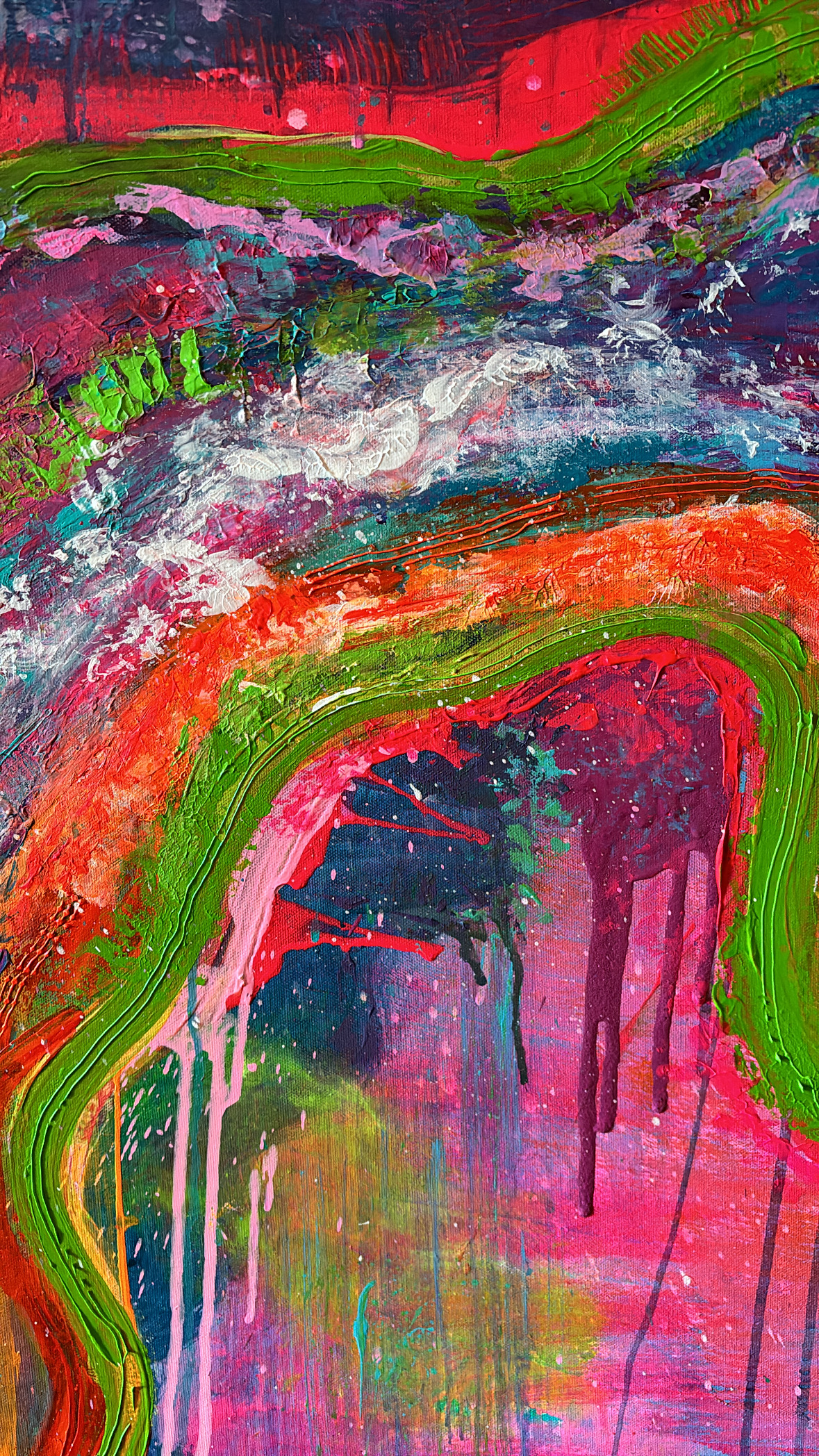
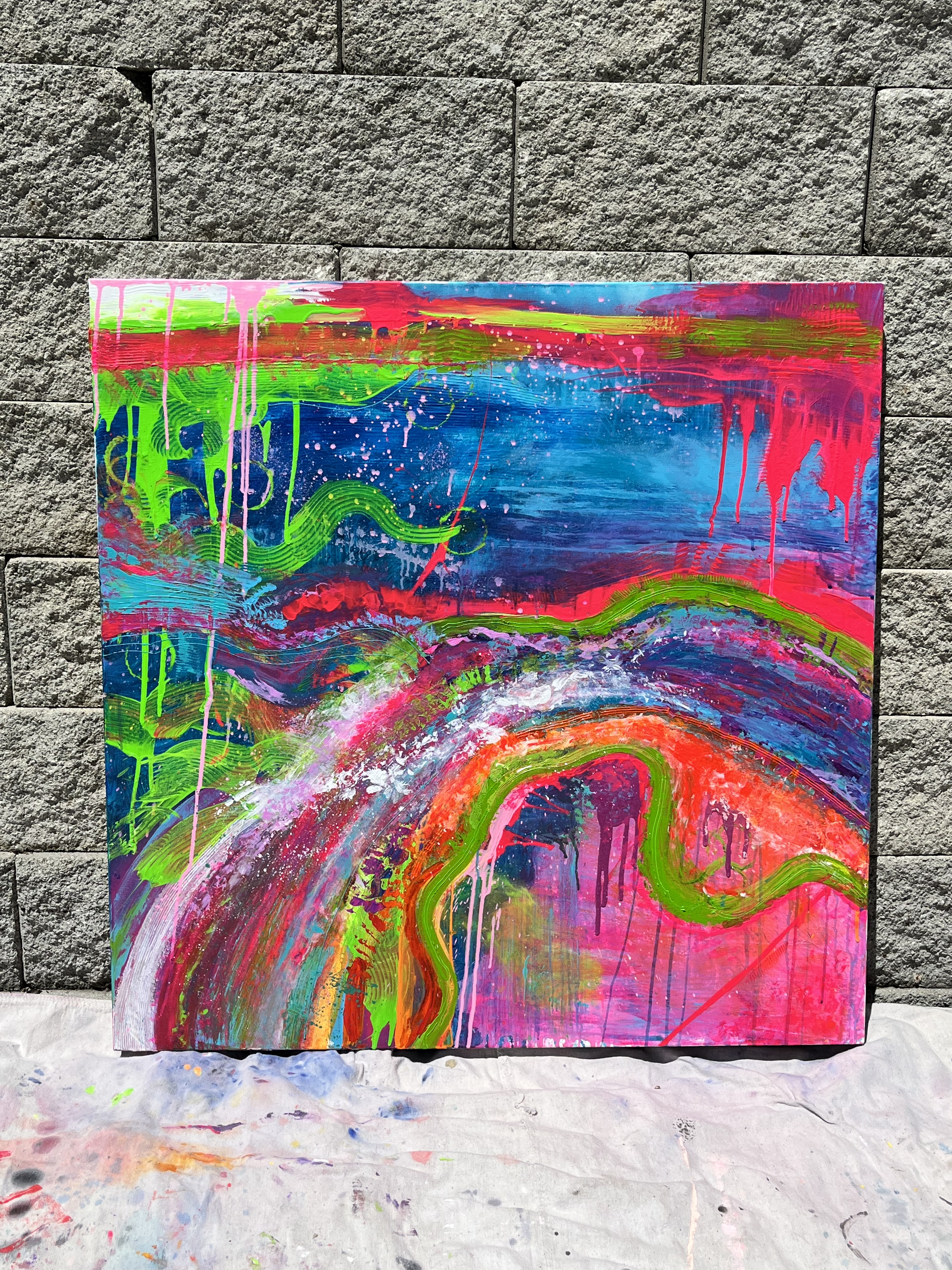
Philosophically, this painting feels like a visual metaphor for the chaos and beauty of becoming. It doesn’t try to present a polished “finished” truth—it’s more like an honest burst of existence. You could say it speaks to the human experience of navigating a wildly vibrant and uncontrollably messy world. And maybe there’s no one “path” through it—just a swirl of color and feeling we learn to dance with.
This painting is loud in the best way—like it refuses to be quiet about whatever it’s feeling. There’s this electric tension like the canvas itself is buzzing. That vivid, almost aggressive green snaking through the piece could be read as life force, or maybe intuition, winding through all the chaos and color. It’s not straight, not easy, but it’s definitely alive.
The splashes of white might symbolize moments of clarity or disruption—when something unexpectedly hits you and shifts your direction. This piece also secretly reminds us of the power of nostalgia. It evokes memories of Nickelodeon slime, a symbol of our childhood creativity. It’s an ode to reimagining that childlike wonder, freedom, and chaos—growing up but not outgrowing that raw part of yourself and the role it plays in our artistic expression.

From a more existential lens, it could mean there’s no perfect structure, only motion. Identity, healing, purpose—all of it is something we paint over and over, letting the mess show through. Maybe the point isn’t to clean it up but to let it be honest. It’s like the painting went through a journey and finally found stillness. Even with all the energy and color, it’s settled into itself—bold, unapologetic, and whole for now. And that “for now” doesn’t take away from its completeness—it just leaves room for evolution, which is the most honest thing art can do.
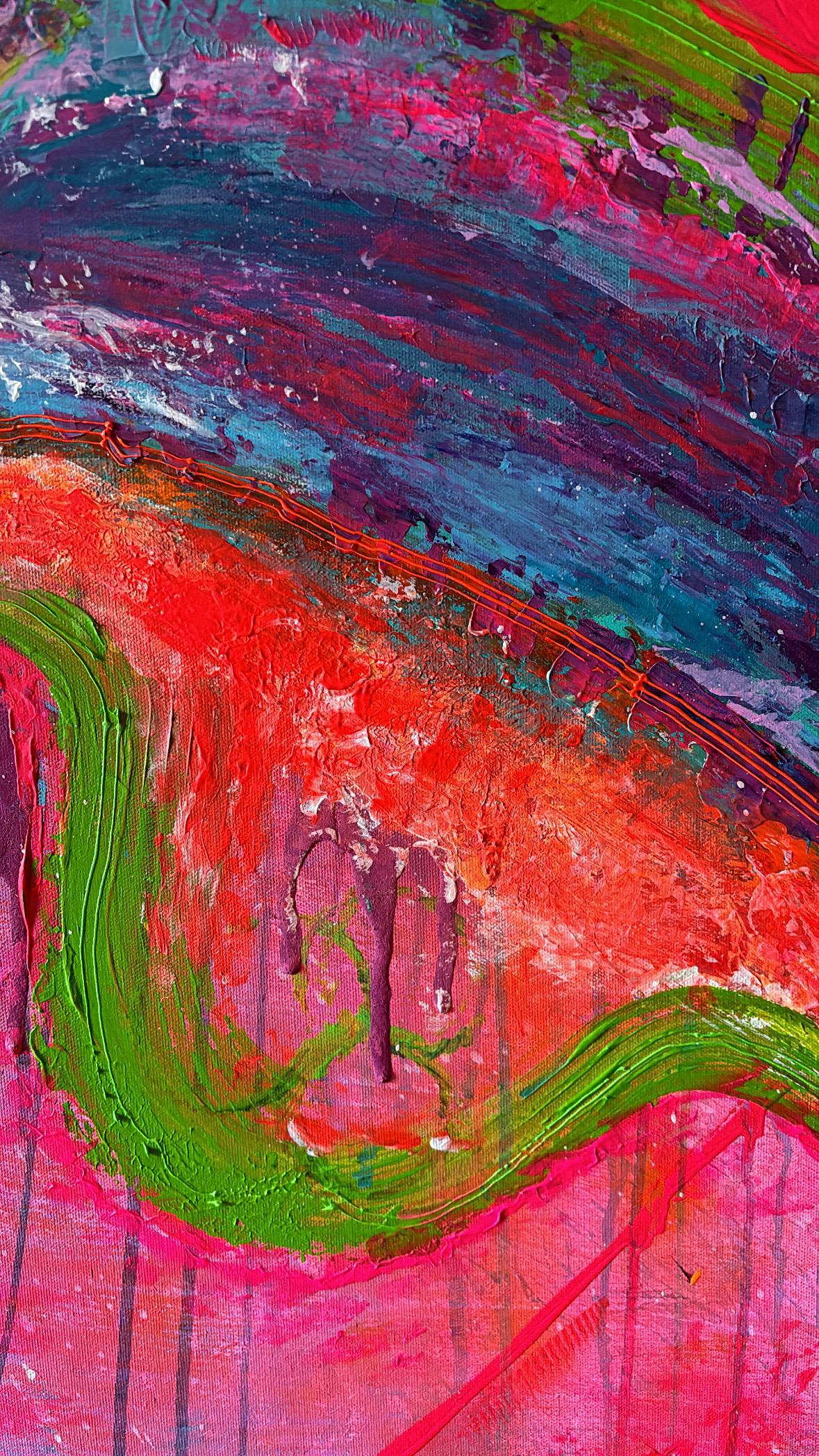
It could be about transformation. Or about standing still in the middle of a storm. Or maybe it’s not about anything—it just is: raw, present, and unapologetically loud. There’s no right way to look at it because everyone who stands in front of it will bring their own mess and meaning.
It invites you in but doesn’t give you answers. It just asks: What do you see? Where does it take you?
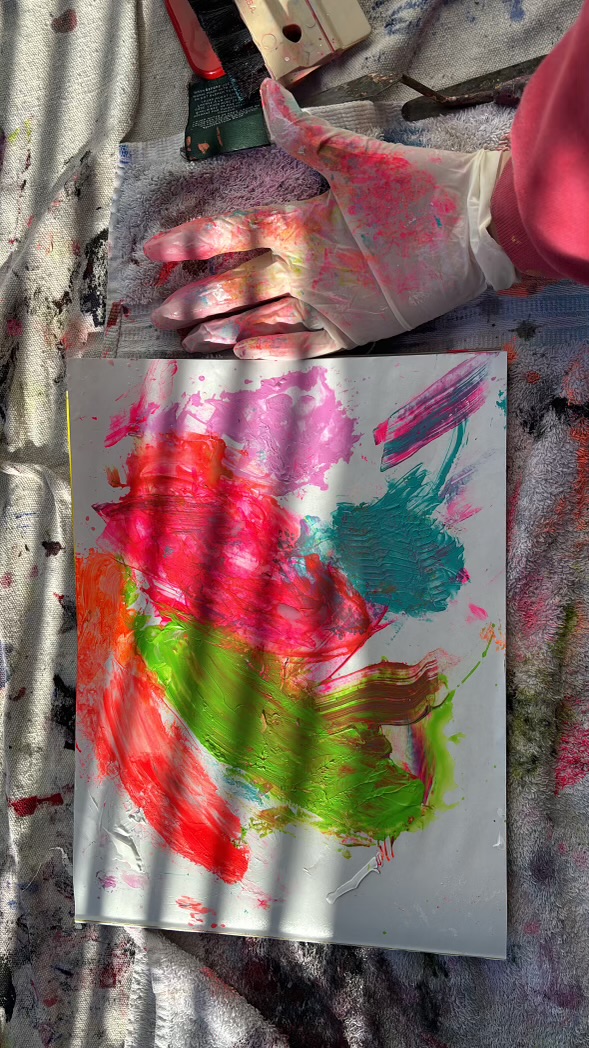

I don’t always know when a painting is finished. Sometimes, it just stops asking for more. And sometimes, it’s about recognizing when the piece no longer needs you. If this painting had a voice, I feel like it’d say: I’m not done yet—and I don’t need to be.
 marysaysmeh